
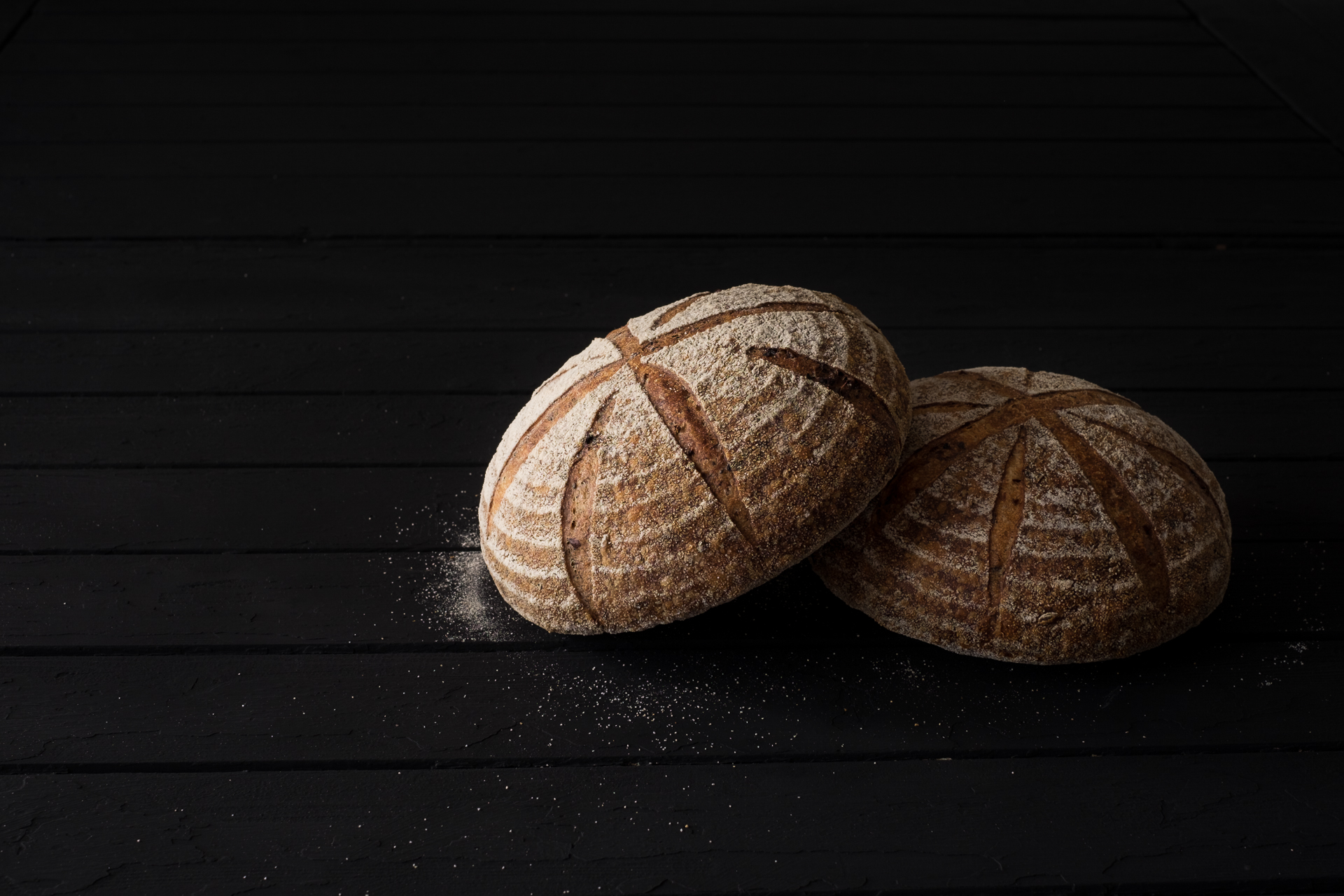
Spelt & Toasted Linseed Sourdough by Aidan Monks
It’s all about blending our flours boldly with the impact of flavour in mind. Taste is always high on the list of considerations, alongside our health beliefs. Each sourdough loaf has its own unique characteristics, appearance, aroma, flavour, and structure all influenced by the grain and techniques we use. The consumer has woken up to what’s important to them; exceptional foods with unquestionable origin, taste, and heritage.
Heritage grains are at the heart and soul of our baking approaches at Lovingly Artisan. Having a close relationship with our millers has a fundamental impact on our approach to recipe design, and how we choose to blend the flours. These factors influence our daily bakes and ideas for the future.
If you’re ready to explore your home baking further, dive into our Spelt & Toasted Linseed Sourdough Recipe
Ingredients
For your leaven:
(make the leaven 24 hours before)
20g Mature starter/mother
40g Water 30’c
20g Strong White flour
20g Wholemeal Rye
For the bread dough:
300g Organic strong white bread flour
200g Organic spelt flour
75g of Toasted linseeds
425g Water at 30’c
10g Fine sea salt
100g Leaven
1. Make the leaven by mixing together the mother, organic flour and warm water in a clean jam jar. Place the lid loosely on top and leave at room temperature 21-25’c for 24 hours prior to your bake
2. To make the sourdough place the water and leaven into a mixing bowl and stir together till mixed. Now add the flour and toasted linseeds with a scraper mixing together. Taking care to scrape down the sides of the bowl at regular intervals until you get a smooth dough with no lumps.
(you are only mixing the ingredients together at this point the stretching comes later).
Now cover the bowl with a damp cloth or a shower cap and leave to stand for two hours to Autolyse. This time allows the natural enzymes in the flour to activate and make the task of kneading a lot easier.
3. Now add the salt and thoroughly mix into the dough evenly.
THE METHOD
4. Stretching the dough.
Firstly dip your hands into a jug of warm water and repeat if the dough feels sticky to touch.
Then push your fingers between the bowl and the dough and grasp the dough, pulling it upwards. You will feel the stretch and tension of the dough.
Then fold that stretched dough down towards the opposite side of the bowl. Turn the bowl slightly and repeat that process till you work your way around the bowl, doing this several times until you feel the dough starts to tighten.
Cover the bowl with the damp cloth and leave for 30min. After the 30 min repeat the stretching technique. You will need to repeat this technique for a further four times.
You are aiming to achieve a smooth, silky dough. Cover and leave for two hours to ferment and grow. This is where the magic happens.
Get yourself ready!
5. Now prepare a bowl for the final proving. Take a linen tea towel and liberally rub flour into the middle of the cloth in a large circle. Line a large bowl or basket with this cloth.
6. After two hours, your dough should feel lighter to the touch and have more volume. It’s time to shape the dough ready for its final prove. The method you used to stretch the dough (4times) you now repeat for one final time. When you have a tight and springy ball of dough, you then place it into the linen lined bowl and cover with a cloth.
7. You now prove the dough for an additional two hours at room temperature,21-25′, until double in size
8. The dough is ready to bake when a finger gently pushed into the dough results in the indentation springing halfway back. If the indentation springs back all the way, the dough is not ready and needs more time – “This is called a bakers patience.”
9. For the best bake use a Dutch Oven or cast iron baking dish. Place your Dutch Oven in a pre-heated oven for 20 minutes.
Whilst your Oven is heating the Dutch Oven, prepare cut a greaseproof paper sheet to line your Dutch Oven and fill a glass with water for the steam!
Now prepare your sourdough for the bake – Get Ready
- Lift your Dutch Oven out of your Oven
- Pour a small glass of water in the bottom of the Dutch Oven
Lightly dust your dough with flour and score the bread with a very sharp serrated knife or blade to allow the bake to spring properly in the oven.
- Place your dough on the greaseproof paper, and lift into the Dutch Oven.
Bake at 240′ c for 30 to 45min the remove the lid and return to the oven for a further 10 – 15 minutes
If you want to learn more, join us on our next forthcoming workshop 30th May 2021 https://lovinglyartisan.com/product/discover-sourdough-with-aidan-monks-online/
Happy Baking!
Aidan
Photography by Artisans & Co
